


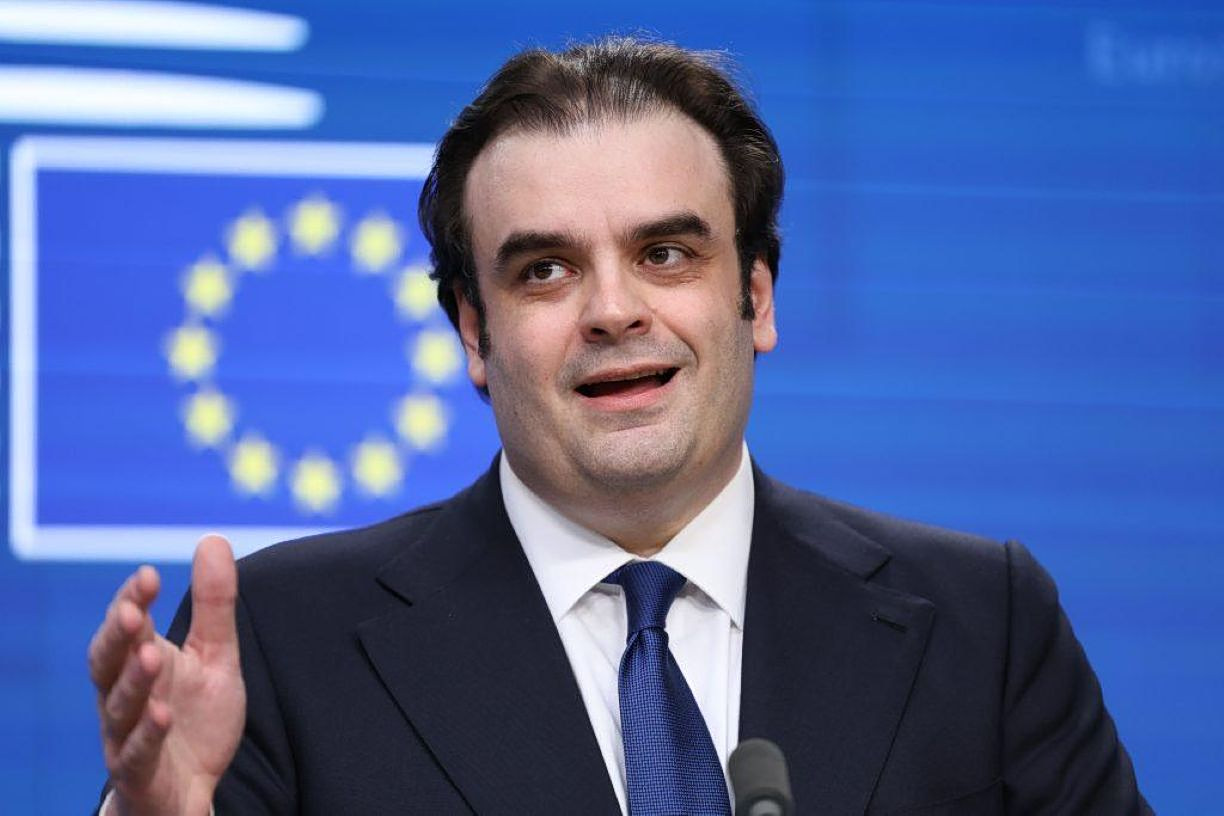
Greek Finance Minister Kyriakos Pierrakakis has outlined an ambitious vision for Greece’s economic competitiveness, declaring that the country seeks to measure itself against top global performers rather than settling for regional comparisons. Speaking ahead of an appearance at a Grant Thornton Greece event in Heraklion on Thursday, Pierrakakis emphasized that Greece has fundamentally transformed since 2019 and is no longer satisfied with marginal improvements.
The finance minister, who also serves as acting President of the Eurogroup, made his remarks via social media, highlighting Crete as an example of Greece’s evolving economic model. According to Pierrakakis, the island is demonstrating how regional development can drive national strength through the integration of universities, research centers, major infrastructure projects, and both public and private investment.
Greece’s Competitive Vision for Economic Growth
Pierrakakis stated that Greece aims to elevate its power across multiple domains, including the economy, diplomacy, defense, and maritime affairs. The finance minister framed this ambition as both a responsibility and a duty for the current government. He noted that in the face of shifting geopolitical dynamics and intensifying international competition, Greece has positioned itself as a reliable partner on the global stage.
The minister emphasized that Greece engages with international partners on equal terms while seeking areas of convergence. However, he made clear that the country will not tolerate any questioning of its national rights, signaling a firm stance on sovereignty issues alongside its cooperative diplomatic approach.
Regional Development as National Strategy
The Crete example highlighted by Pierrakakis illustrates a broader strategy for Greek economic development that leverages regional strengths. According to the finance minister, an ecosystem is forming on the island that combines academic institutions, research facilities, infrastructure development, public investment, and private sector initiatives. This model, he suggested, demonstrates how Greece’s regions can serve as engines of economic growth rather than mere recipients of central government support.
Meanwhile, Pierrakakis contrasted the Greece of 2026 with the country as it existed in 2019, suggesting significant progress has been achieved during this period. The finance minister indicated that the government is no longer content with incremental improvements or favorable comparisons with other countries in the region. Instead, Greece seeks to compete with the best-performing nations in every sector, setting a higher benchmark for national achievement.
Geopolitical Positioning and Economic Ambition
The remarks come as Greece navigates complex geopolitical realignments in the Eastern Mediterranean and broader European context. Additionally, the country has been working to strengthen its economic fundamentals following years of fiscal challenges that required international assistance. Pierrakakis’s statement reflects a confidence in Greece’s improved economic position and its capacity to play a more assertive role in regional and international affairs.
The finance minister’s emphasis on competing with top global performers in every sector represents an ambitious departure from previous approaches focused primarily on recovery and stability. However, the statement did not provide specific metrics or timelines for achieving this competitive positioning across different economic sectors.
Authorities have not announced specific policy initiatives or reforms that will be implemented to achieve the competitive economic goals outlined by the finance minister. It remains to be seen how Greece will translate this ambitious vision into concrete measures that position the country alongside the world’s top economic performers in various fields.

Follow Live Media News on Google News
Get Live Media News headlines in your feed — and add Live Media News as a preferred source in Google Search.
Stay updated
Follow Live Media News in Google News for faster access to breaking coverage, reporting, and analysis.
- Search any trending topic on Google (for example: Greece news).
- On the results page, find the Top stories section.
- Tap Preferred sources and select Live Media News.