


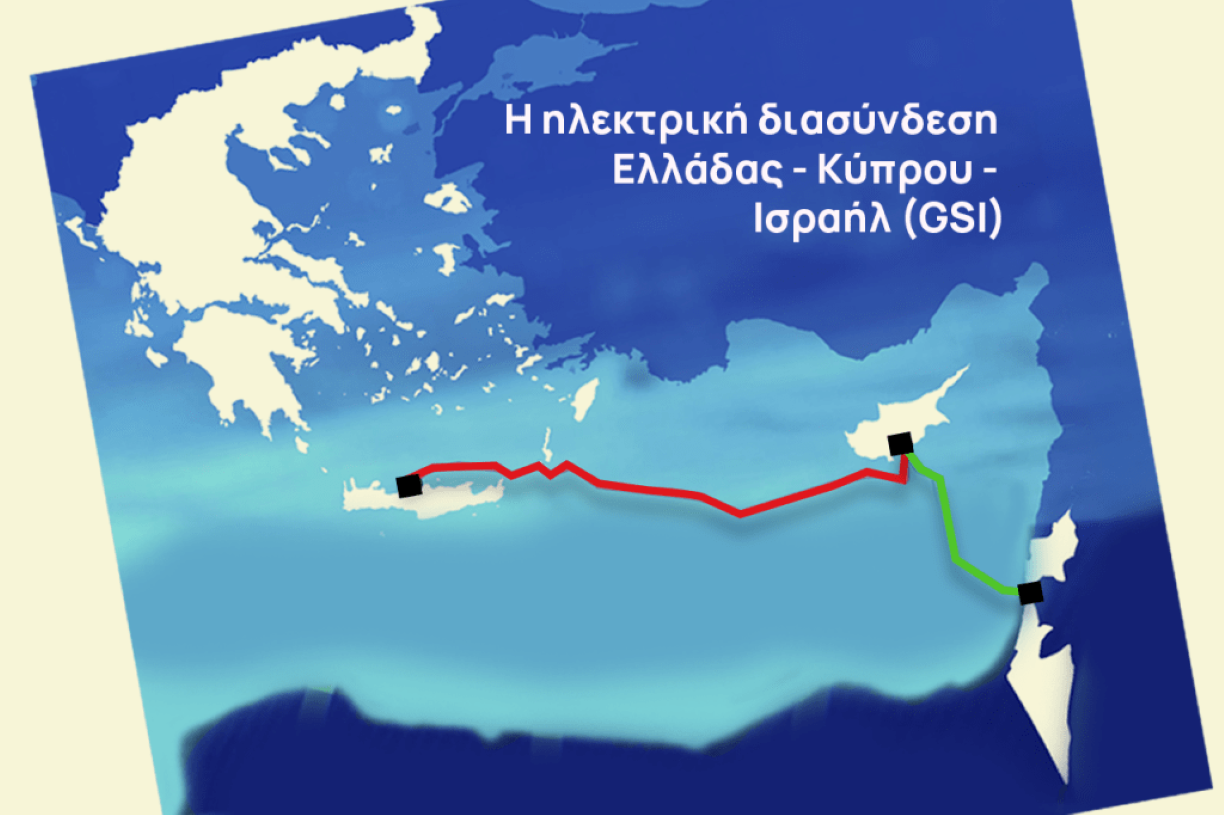
A former energy minister of Cyprus has issued a strong warning about the future of the Great Sea Interconnector, claiming that local interests are sabotaging efforts to link the island to Greece’s electricity grid. Giorgos Papanastasiou told Cypriot newspaper Politis that vested interests are portraying any new electricity source entering the small Cypriot market as a threat, particularly if it is not controlled locally.
Cyprus remains the only European Union member state not connected to any other national electricity grid, relying entirely on domestic power generation. Papanastasiou emphasized that a country in energy isolation must find ways to achieve interconnection with regional networks.
Risks of Energy Isolation for Cyprus
According to Papanastasiou, Cyprus’s current energy isolation exposes the country to significant vulnerabilities. He stated that dependence on local production alone leaves the nation exposed to risks including high production costs, limited competition, and supply insecurity.
The former minister argued that countries able to secure access to affordable and sufficient energy will be those that survive and maintain competitive industrial output over the long term. Without interconnection, Cyprus risks falling behind its regional neighbors in economic competitiveness.
Criticism of Short-Term Planning
Papanastasiou criticized what he described as a narrow focus on feasibility studies rather than comprehensive strategic planning for the island’s energy future. He suggested that Cyprus has become trapped at the level of technical assessments without seeing the broader strategic picture.
Additionally, the former minister warned that the country risks missing a historic opportunity to strengthen its energy security and competitiveness. He made indirect references to European-level scrutiny without providing specific details about ongoing investigations.
Great Sea Interconnector Project Faces Scrutiny
The comments come amid ongoing debate and investigation surrounding the Greece-Cyprus electricity interconnection, which forms part of the broader Great Sea Interconnector project. The ambitious infrastructure initiative aims to link the power grids of Greece, Cyprus, and Israel through underwater cables.
Papanastasiou referenced potential involvement by the European Public Prosecutor’s Office, stating that investigations at the European level are not conducted randomly. He noted that for European grants to be withdrawn, evidence of wrongdoing must exist, though he did not elaborate further.
Electricity Supply Concerns
Meanwhile, Papanastasiou warned that Cyprus could face serious consequences if electricity supply proves inadequate in coming years. Several conventional power generation units are currently awaiting the arrival of natural gas infrastructure, raising concerns about supply adequacy during the transition period.
However, the former minister also pointed to what he described as distortions in the domestic electricity market. He explained that commercial renewable energy parks producing low-cost electricity continue to be compensated based on the higher costs of conventional and more polluting generation methods.
In contrast to the expected benefits for consumers, Papanastasiou argued that profitability remains concentrated among renewable energy producers and suppliers. He suggested that these producers have a vested interest in maintaining the current compensation system, which does not pass sufficient savings to end consumers.
Implications for Energy Transition
The former minister’s comments highlight the complex challenges facing Cyprus as it attempts to modernize its energy infrastructure and reduce isolation. The Great Sea Interconnector represents a critical opportunity for the island to integrate with regional energy markets and enhance supply security.
Nevertheless, local opposition and competing interests appear to be complicating progress on the interconnection project. The balance between protecting existing market participants and achieving broader energy security goals remains a contentious issue.
Authorities have not confirmed a timeline for resolving the ongoing debates surrounding the Great Sea Interconnector project. The outcome of European-level investigations and the resolution of domestic market concerns will likely determine whether Cyprus can overcome its energy isolation in the coming years.

Follow Live Media News on Google News
Get Live Media News headlines in your feed — and add Live Media News as a preferred source in Google Search.
Stay updated
Follow Live Media News in Google News for faster access to breaking coverage, reporting, and analysis.
- Search any trending topic on Google (for example: Greece news).
- On the results page, find the Top stories section.
- Tap Preferred sources and select Live Media News.