


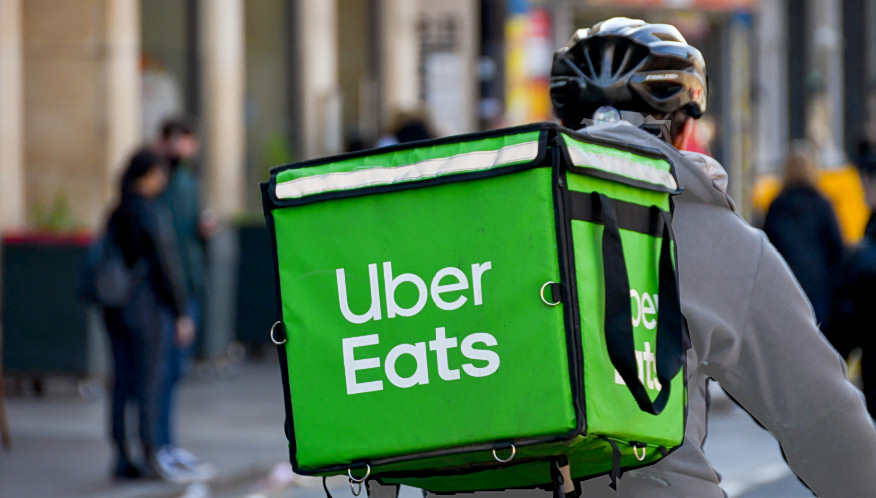
Uber Eats is preparing to enter the Greek delivery market in 2026, marking a significant development in the country’s competitive food delivery landscape. According to a senior executive of the American company, Greece has been included in an expansion plan covering seven new European markets, a move that has already sparked considerable interest among industry observers and existing market players.
The announcement comes as Greece’s food delivery sector has matured significantly, with established companies having invested tens of millions of euros to build their customer bases. The ready-to-eat food and coffee delivery market is estimated to approach or exceed €1.5 billion annually, creating a lucrative opportunity for new entrants.
Competition in a Mature Greek Delivery Market
Unlike emerging markets where Uber Eats might create new demand, the American giant will be competing for share in an already established ecosystem. Companies such as efood, Wolt, and BOX have built strong networks and shaped consumer behavior over several years. Food delivery in Greece is no longer a supplementary activity for restaurants but an autonomous ecosystem supporting tens of thousands of partner businesses and processing millions of orders monthly.
Additionally, these platforms have educated consumers and developed sophisticated infrastructure. efood, operating under Delivery Hero, maintains a leading position with more than 20,000 partners. Meanwhile, Wolt benefits from the financial strength of its parent company DoorDash following acquisition, while BOX leverages the telecommunications ecosystem and customer base of its backer Cosmote.
Uber Eats Advantages and Strategic Positioning
According to reporting from the Financial Times, Uber intends to leverage its existing presence as an established platform for transportation, logistics, and subscription services. The company is not starting from zero in Greece, as it already has users, drivers, data, and—most importantly—an application installed on many mobile phones. This existing infrastructure provides a significant competitive advantage over completely new market entrants.
Furthermore, customers who use Uber for transportation are estimated to be more likely to also order food through the same platform. The Uber One subscription service may offer discounts across both transportation and food delivery, creating additional incentive for cross-service usage and customer retention.
Market Implications and Commission Pressure
Market sources indicate that every new entry into the Greek delivery market creates pressure on commissions charged to restaurants and payments to couriers. Restaurants gain more platform options while couriers have additional income opportunities. However, the competitive dynamics become more complex as platforms compete not only for customers but also for control of the delivery network itself.
In contrast to expansion in less saturated markets, Uber’s entry into the Greek food delivery sector will intensify competition and potentially compress profit margins. Industry analysts suggest this development will act as a catalyst, accelerating investments by existing players who must defend their market positions. The established companies are expected to strengthen their offers and loyalty programs in anticipation of increased competition.
Existing players have significant advantages in brand recognition, infrastructure, and local market experience. Nevertheless, they face the challenge of competing against a global company with substantial financial resources and an established user base. The impact on commission structures and service quality for restaurants and consumers remains to be seen as the 2026 launch date approaches.
Market observers will monitor how existing platforms respond to the announcement in the coming months, though specific competitive strategies and pricing adjustments have not yet been confirmed by the major players.

Follow Live Media News on Google News
Get Live Media News headlines in your feed — and add Live Media News as a preferred source in Google Search.
Stay updated
Follow Live Media News in Google News for faster access to breaking coverage, reporting, and analysis.
- Search any trending topic on Google (for example: Greece news).
- On the results page, find the Top stories section.
- Tap Preferred sources and select Live Media News.