


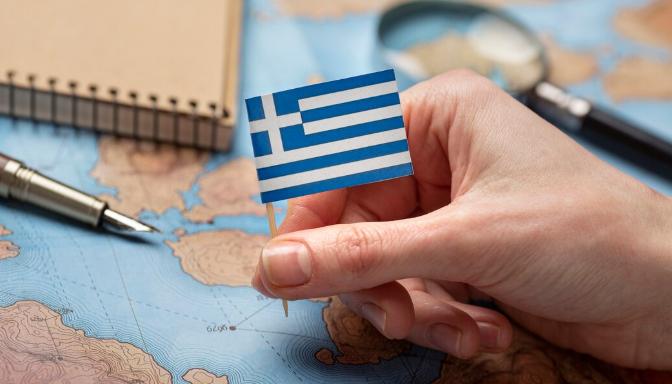
Contradictions abound in today’s central Athens. Ermou Street cafés are once again packed. Overlooking Piraeus, where the skyline is being reshaped by Chinese-funded port expansions, are construction cranes. However, older Greeks continue to discuss 2012 with a wince that never quite goes away, much like Americans discuss 2008. The nation has evolved. It has also recalled.
Greece served as Europe’s cautionary tale for about ten years, serving as a point of reference for economists looking to intimidate a finance minister. The figures from that era still seem unbelievable. a 2009 fiscal deficit exceeding 15% of GDP. Following the adoption of the euro, pensions and social transfers increased by 7% of GDP. a nearly €289 billion bailout package, the biggest in financial history. Looking back, it seems that no one really thought the nation could survive it unscathed, and for a while it nearly didn’t.
| Greece — Country & Economic Profile | Details |
|---|---|
| Capital | Athens |
| Population (approx.) | 10.4 million |
| Currency | Euro (€), adopted 2001 |
| Total Bailout Received (2010–2018) | Approximately €289 billion |
| Final Bailout Programme Concluded | 20 August 2018 |
| Peak Debt-to-GDP | Over 180% (2018 high) |
| GDP per Capita Status (2019) | 22% below pre-crisis level |
| Current Government | Mitsotakis administration, “Greece 2.0” reform plan |
| Sovereign Credit Trajectory | Series of upgrades back toward investment grade |
| Key International Lenders | EU, ECB, International Monetary Fund |
| Notable Economic Reform Areas | Pensions, taxation, banking, labour markets |
| Estimated Recovery to Pre-Crisis GDP | Between 2031 (EU forecast) and 2034 (IMF forecast) |
It’s intriguing how the eventual recovery refused to appear dramatic. In August 2018, Greece quietly withdrew from its third eurozone bailout program, with Pierre Moscovici warning that recovery is “a process, not an event.” That expression held up well over time. In fits and starts, the economy has improved; it has never been particularly impressive and has frequently been disappointing on a quarterly basis, but it has been compounding in a way that the headlines failed to notice. Investors appear to think that something has changed. Bond yields have returned to normal after being apocalyptic. Upgrades after upgrades have been issued by rating agencies, those infamously sluggish entities.
A portion of the credit, but not all of it, should go to the Mitsotakis government’s Greece 2.0 plan. Even though they were harsh, years of austerity did bring the public finances back into balance. In fact, the government exceeded the 3.5 percent primary surplus target that was agreed upon with European partners—a discipline that hardly anyone anticipated from Athens. Pensions continue to be politically untouchable in the same way that American social security is, and tax collection is still a weak point, declining rather than increasing in some years. But what matters to markets is that the trajectory has shifted.
The human cost of these figures is difficult to ignore. The IMF predicts that GDP per capita won’t fully recover until 2034, and it is still 22% below pre-crisis levels. That’s a generation. According to statistics, a child born during the worst of the depression will graduate from college before the nation reaches its previous level. Approximately 500,000 Greeks, many of whom were young doctors and engineers, were emigrated, and not all of them are returning.

Even so, there’s a more subdued optimism than in years as we watch this develop. Travel is surpassing all previous records. Once functionally insolvent, Greek banks are now lending again after cleaning up their balance sheets. Thanks to tax breaks and stability that is exceptional for Greece, foreign direct investment is increasing. The nation has turned into an intriguing case study for turnaround-focused emerging market investors, the same group that formerly surrounded Brazil and Argentina.
It is truly unclear if this will turn out to be another false dawn or a long-lasting success story. Greece was in a similar situation in 2007, riding cheap credit denominated in euros toward an invisible iceberg. The structural flaws that Poul Thomsen identified—limited tax bases, shaky collection, and a sizable informal economy—remain. They’ve only been controlled. However, a change has occurred that may be cultural or even institutional in nature, indicating that the lesson was learned. Europe is keeping a close eye on things. And lastly are the markets.

Follow Live Media News on Google News
Get Live Media News headlines in your feed — and add Live Media News as a preferred source in Google Search.
Stay updated
Follow Live Media News in Google News for faster access to breaking coverage, reporting, and analysis.
- Search any trending topic on Google (for example: Greece news).
- On the results page, find the Top stories section.
- Tap Preferred sources and select Live Media News.