


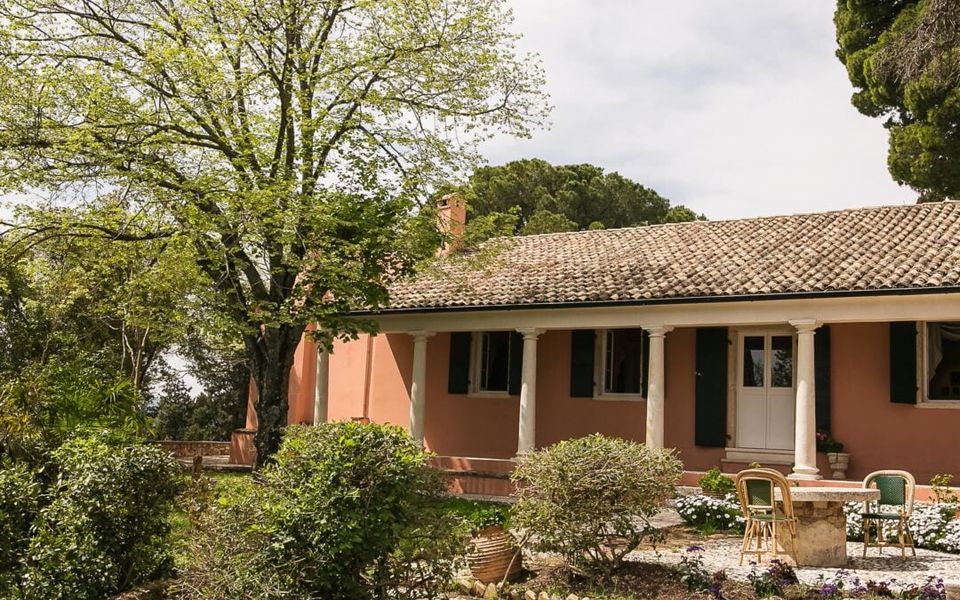
The Kapodistrias Museum in Corfu, Greece’s only museum dedicated to the nation’s first governor Ioannis Kapodistrias, faces potential closure due to severe financial difficulties. Located at the historic Koukouritsa estate six kilometers west of Corfu town, the institution has struggled to maintain operations since opening its doors in 1981. Museum director Maya Charalampopoulou confirmed that available funds are insufficient to cover basic operational needs, with annual expenses consistently exceeding income.
The timing of this crisis is particularly significant as public interest in Kapodistrias has surged following a recent film about the statesman by director Yannis Smaragdis. The museum houses irreplaceable family heirlooms, famous paintings, furniture from the rural mansion, and documents from Kapodistrias’ governorship between 1828 and 1831, most donated by Maria Kapodistria-Desylla, a descendant of the governor’s younger brother.
Financial Challenges Threaten Museum Operations
According to Charalampopoulou, the lack of adequate and stable funding has forced difficult decisions including suspension of operations during winter months and the absence of permanent staff. The museum currently relies on a small network of volunteers, private sponsorships, donations and grants to organize events. These financial constraints have also restricted maintenance work and limited the planning of periodic exhibitions, digital projects, and educational programs.
The institution operates under the ownership of three Corfiot cultural organizations: the Corfu Reading Society, Philharmonic Society of Corfu, and the Society for Corfiot Studies. Each holds one-third ownership of the property, which was donated by Kapodistria-Desylla in 1979. However, these associations face their own financial pressures and cannot adequately fund museum operations.
Historical Significance of the Kapodistrias Museum
The museum serves as more than a repository of artifacts. It functions as a Center for Kapodistrian Studies and remains an important educational resource for the region. Primary schools in Corfu regularly visit the site, with many students returning during middle or high school years. Charalampopoulou described these repeat visits as among the most moving moments, noting children’s enthusiasm in recalling what they learned previously.
Additionally, the museum successfully secured European funding after reopening in 2017 following a renovation that began in 2012. The renovation was supported by “The Friends of the Kapodistrias Museum,” an association founded in 2016 specifically to provide financial assistance and expertise. The modernized institution became part of organized school visits and won praise from museum experts.
Calls for State Intervention
Association president Eleni Stampogli emphasized that the museum’s historical importance extends beyond local concerns. She argued that Kapodistrias is associated with Greece’s transition from the pre-revolutionary world to the formation of the national state, making it a matter of national significance. Therefore, she believes the Greek Parliament must ensure the museum’s smooth operation and development.
Meanwhile, lawyer Marios Donatos Paipetis, who witnessed the original donation contract signing in 1979, supports this position. He stated that the Hellenic Parliament has a historical, moral and political obligation to permanently assume museum operations. Paipetis proposed that Parliament provide funding at a certain level while maintaining management and strict accountability through the three nonprofit Corfiot associations.
In contrast to typical museum funding models, this institution has operated without an endowment or dedicated resources since its inception. The significant donation from Kapodistria-Desylla included the property and artifacts but no financial mechanism to ensure long-term sustainability. European statistics demonstrate that museums cannot survive independently, particularly small institutions with limited visitation during off-peak seasons, according to Stampogli.
Broader Implications for Cultural Heritage
Stampogli raised concerns about what the potential closure reveals regarding Greece’s relationship with its recent past. She questioned how a museum dedicated to Kapodistrias and the birth of the Greek state might be unable to welcome the public. Charalampopoulou framed the issue more broadly, stating that preserving such institutions represents both respect for the past and a foundation for shaping a mature, democratic society.
The museum has ambitious plans ahead, including events marking the 250th anniversary of Kapodistrias’ birth, the 200th anniversary of his arrival in Greece in 2028, and two centuries since his assassination in 2031. However, uncertainty about the institution’s viability casts doubt on whether these commemorations can proceed as planned. The museum awaits potential government intervention or alternative funding solutions, though authorities have not confirmed any specific support measures or timelines for assistance.

Follow Live Media News on Google News
Get Live Media News headlines in your feed — and add Live Media News as a preferred source in Google Search.
Stay updated
Follow Live Media News in Google News for faster access to breaking coverage, reporting, and analysis.
- Search any trending topic on Google (for example: Greece news).
- On the results page, find the Top stories section.
- Tap Preferred sources and select Live Media News.