


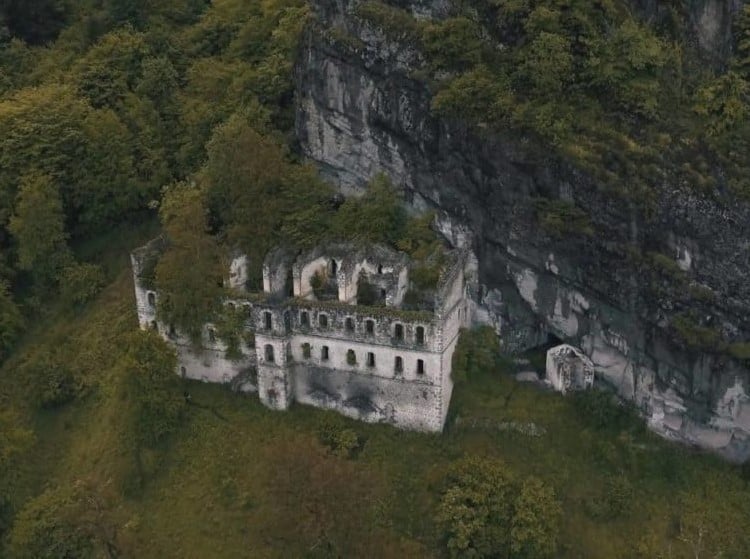
Restoration efforts for the historic Vazelon Monastery are advancing after years of deterioration, according to reports from Turkey. The Greek Orthodox monastery, one of the oldest religious sites in Anatolia, is located in the Pontus region near Trabzon in northeastern Turkey. The Trabzon Metropolitan Municipality has confirmed that studies and preliminary work to restore the monument are now underway.
The development represents a significant milestone for the ancient monastery, which has suffered from neglect, vandalism, and lack of official attention for decades. According to information released by the municipality, repairs to the surrounding area have already been completed as part of the initial phase of the project.
Vazelon Monastery Restoration Linked to Tourism Initiative
The restoration of Vazelon Monastery is part of a broader tourism development program scheduled for 2026. The municipality indicated that hiking routes and protective coverings have been finalized to support visitor access while safeguarding the structure. These improvements are tied to the Vazelon-Kustul Monasteries tourism route project, which aims to connect multiple heritage sites in the region.
The initiative reflects growing recognition of the monastery’s cultural and historical value. However, authorities have not confirmed specific timelines for the completion of restoration work or released detailed plans regarding the scope of structural repairs.
Historical Significance of the Site
Vazelon Monastery holds deep historical importance as one of the most ancient monastic complexes in Anatolia. Founded centuries ago, the site served as a major center of Greek Orthodox worship and learning in the Pontus region. Its architecture and religious artifacts provide valuable insights into the Byzantine and post-Byzantine periods.
Additionally, the monastery is closely linked to the heritage of Pontic Greeks, many of whom were displaced during the population exchanges and upheavals of the early 20th century. For diaspora communities and heritage advocates, the monastery’s preservation carries emotional and symbolic weight beyond its architectural significance.
Challenges Facing Heritage Preservation
Despite the current restoration momentum, the Vazelon Monastery has faced considerable challenges over the years. Exposure to harsh weather conditions, structural decay, and acts of vandalism have left portions of the complex in fragile condition. Meanwhile, limited funding and bureaucratic obstacles have historically slowed preservation efforts.
In contrast to some other religious heritage sites in Turkey, which have received substantial restoration investment, Vazelon has remained largely outside the spotlight until recently. The report indicates that the inclusion of the monastery in a formal tourism and investment program marks a shift in official policy toward the site.
Economic and Cultural Impact of Heritage Tourism
The project aims to promote sustainable tourism development in northeastern Turkey while preserving the monastery’s heritage. By creating designated hiking routes and infrastructure improvements, authorities hope to attract domestic and international visitors interested in religious history and cultural tourism. The Vazelon-Kustul route could become a significant draw for travelers exploring the Black Sea region.
However, balancing tourism growth with heritage conservation remains a delicate task. Experts emphasize that restoration efforts must prioritize authenticity and structural integrity over commercial considerations to ensure the monastery’s long-term survival.
The Trabzon Metropolitan Municipality has not yet announced a completion date for the restoration studies or provided further details on funding sources. As the 2026 investment program advances, observers will be watching for updates on construction timelines and public access plans for the restored Vazelon Monastery site.

Follow Live Media News on Google News
Get Live Media News headlines in your feed — and add Live Media News as a preferred source in Google Search.
Stay updated
Follow Live Media News in Google News for faster access to breaking coverage, reporting, and analysis.
- Search any trending topic on Google (for example: Greece news).
- On the results page, find the Top stories section.
- Tap Preferred sources and select Live Media News.