


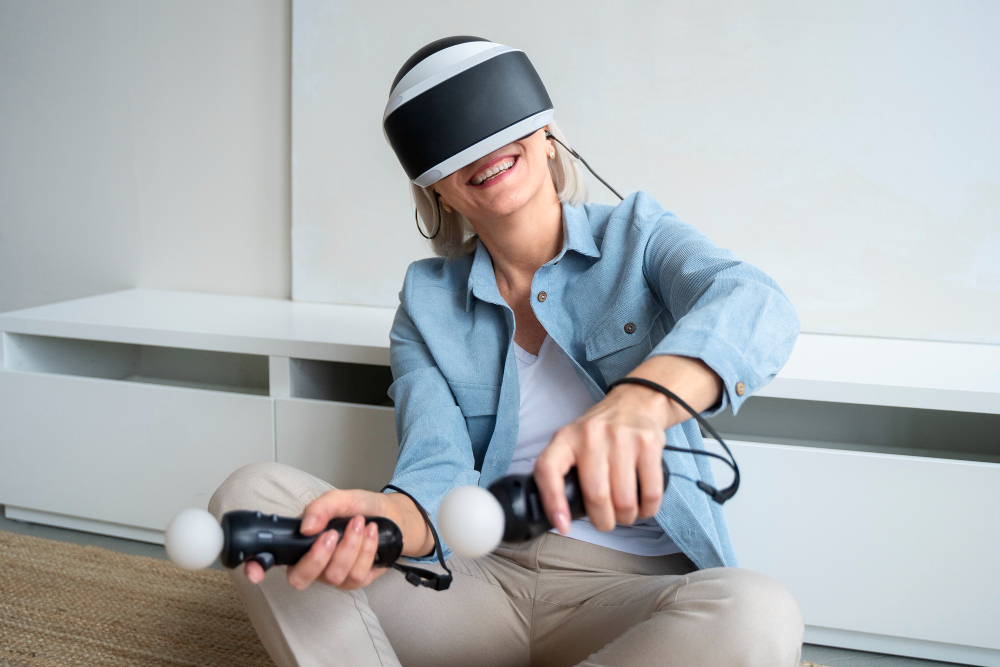
The change did not occur all at once. It happened quietly, almost courteously, as Apple usually does when making a significant change. Inside its glass-walled Cupertino headquarters, engineers allegedly started refocusing their efforts on creating something smaller, lighter, and oddly more intimate—glasses that are meant to help you understand the world rather than just show it.
Perhaps that sounds innocuous. Another device. However, it seems that the purpose of these glasses isn’t really display. Their focus is on observation.
| Category | Details |
|---|---|
| Company | Apple Inc. |
| Headquarters | Cupertino, California, United States |
| Product (Rumored) | AI-powered Smart Glasses (Code-named N50) |
| Expected Launch | Estimated around 2027 |
| Core Technology | Computer vision cameras, microphones, speakers, Siri integration |
| Purpose | Context-aware AI assistance based on real-world surroundings |
| Strategic Direction | Expanding Apple Intelligence beyond the iPhone into always-on wearable devices |
Apple’s rumored glasses might not even have screens, in contrast to large headsets. Rather, they sit quietly on your face, listening, watching, and interpreting while using cameras, microphones, and speakers. The implication lingers even though the fact itself seems subtle. These gadgets are more than just tools. They are friends. Constantly there. Always conscious.
Almost everyone is already holding or looking into an iPhone while observing commuters on a morning train. The naturalness of that posture—heads lowered, shoulders slightly curved inward, and attention focused—is difficult to ignore. Apple appears to think that eliminating even that gesture is the next step. Don’t dig into your pockets. No screens. A voice in your ear that reacts to whatever you’re looking at at the moment.
This appears to be the logical conclusion of Apple’s long-term strategy, according to investors. The business has been drawing customers further into its ecosystem for almost 20 years, adding devices and services until it becomes difficult to leave. That loop would be completed by glasses, which would make Apple software a physical part of the body.
Perhaps that is the point.
Even though contextual computing is unquestionably clever, there is something unnerving about the concept. Imagine looking at a restaurant on a street in San Francisco or Amsterdam and hearing its rating whispered to you instantly. Or walking past a complete stranger and having their name suggested because you have a meeting scheduled later on your calendar. Yes, it is convenient. But silently intrusive, too.
In many respects, Apple has been more cautious than its competitors and has always presented itself as a privacy-focused business. However, everything you see would still need to be visible through these glasses. cameras that are incorporated into the frame and can interpret faces, objects, and distance. Users’ understanding of what that means is still lacking, as is their willingness to care once the convenience becomes too great to resist.
They won’t hesitate long, according to history.
There was skepticism when the original iPhone was introduced in 2007. Typing on glass was questioned by others. They were concerned about battery life. They questioned why anyone required continuous access to the internet. Within a few years, those doubts faded, replaced by habit. Now, seeing that change take place is like seeing the beginnings of something similar.
Of course, Apple is not alone. To see how far customers will go, competitors like Meta have already introduced glasses with cameras. However, Apple usually waits until it thinks it can fully control the experience before improving, watching, and joining.
The subdued theme that unites all of this is control.
Apple wouldn’t merely provide information if it put AI right on your face. It would choose what information is important enough to divert your attention, when it appears, and how it appears. Influence like that is subtle but potent. Behavior is shaped over time.
Sitting inside an Apple Store during the Apple Watch’s debut is a memory from years ago. Before dawn, customers waited in line, some eager, some unsure. Many were unsure of the precise reason for their need. However, they relied on Apple to inform them.
It appears that the same pattern is emerging once more.
According to reports, Apple’s glasses serve as the iPhone’s “eyes and ears” and extend its functionality. Just that phrase is powerful. It implies that the phone, which was once essential, is now becoming less important. The user’s senses are getting closer to the actual interface.
And perhaps nearer to their minds.
One gets the impression that Apple has a basic understanding of human nature. Humans are quick to adjust. Tomorrow, what seems strange today becomes invisible. After a year, glasses that watch and listen might seem like nothing out of the ordinary. essential after five years.
Uncertainty still looms over everything.
Customers may not be as receptive to cameras on faces as they were to cameras in pockets. Change can be temporarily resisted by social norms. While some early adopters may embrace it, others may be hesitant because they are afraid of being secretly filmed or observed.
However, Apple has a way of eliminating hesitancy.
The familiar minimalist displays glowed through the windows as I recently passed an Apple Store. Watches, laptops, and phones are all arranged with purposeful simplicity. It was simple to picture glasses joining them in the future, sitting on wooden tables and awaiting a try-on.
They will initially appear to be accessories.
They might eventually transform into something completely different.
Because as soon as technology comprehends what you see, it starts to influence your perception of it.

Follow Live Media News on Google News
Get Live Media News headlines in your feed — and add Live Media News as a preferred source in Google Search.
Stay updated
Follow Live Media News in Google News for faster access to breaking coverage, reporting, and analysis.
- Search any trending topic on Google (for example: Greece news).
- On the results page, find the Top stories section.
- Tap Preferred sources and select Live Media News.