


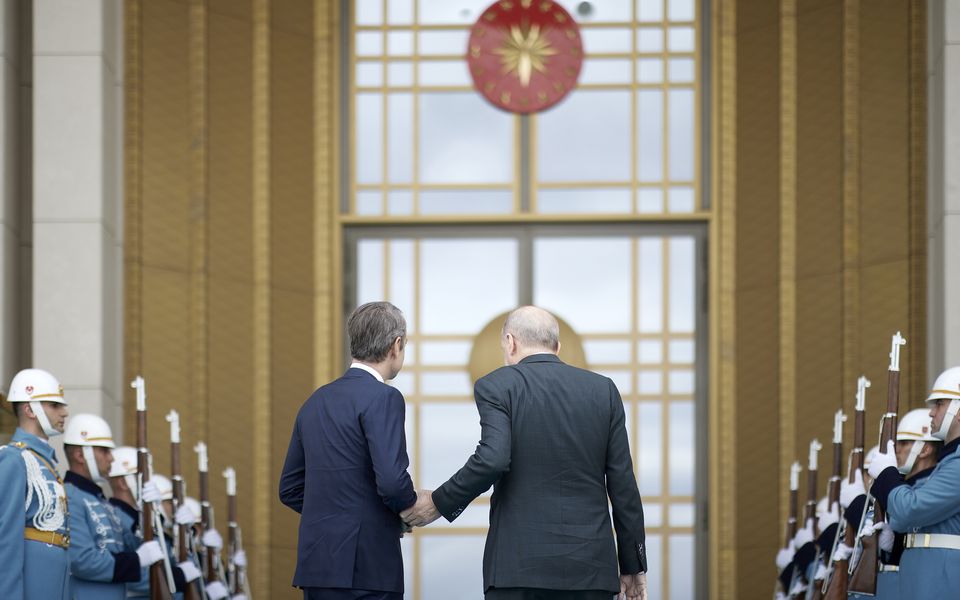
Greece and Turkey have reaffirmed their commitment to direct bilateral dialogue following last week’s Greek-Turkish summit in Ankara, with both nations rejecting the possibility of United States mediation in their longstanding disputes. The meeting between Prime Minister Kyriakos Mitsotakis and Turkish President Recep Tayyip Erdogan underscored the continuing diplomatic detente between the two neighboring countries that has been maintained since February 2023.
According to officials from both nations, the summit did not produce resolutions to contentious bilateral issues. However, the calm and respectful tone of the discussions was viewed as a diplomatic success in itself, reinforcing the relative stability that has characterized Greek-Turkish relations over the past two years.
Greek-Turkish Summit Emphasizes Direct Communication
During their private one-on-one meeting, Mitsotakis and Erdogan reportedly reached a mutual understanding regarding international involvement in their bilateral disputes. Both leaders agreed that as long as Greece and Turkey maintain effective communication channels, the Trump administration is unlikely to push for long-term solutions concerning disagreements in the Aegean Sea and the Eastern Mediterranean, according to sources familiar with the discussions.
The assessment reflects a shared view that Washington’s foreign policy priorities currently lie elsewhere. Officials from both countries indicated that the United States appears more focused on pressing international crises, particularly developments in the Middle East and the ongoing conflict in Ukraine.
Regional Disputes Remain Unresolved
The Aegean Sea and Eastern Mediterranean disputes between Greece and Turkey encompass maritime boundaries, continental shelf rights, and airspace claims that have persisted for decades. While the recent summit in Ankara did not advance solutions to these complex issues, the continuation of dialogue represents a significant departure from periods of heightened tension in previous years.
Additionally, both nations appear to recognize that maintaining the current climate of bilateral calm serves their immediate strategic interests. The rejection of US mediation suggests a preference for preserving the existing framework of direct negotiations rather than introducing external actors that could complicate diplomatic dynamics.
Electoral Calendars Impact Diplomatic Expectations
Political realities in both countries are expected to influence the pace of bilateral negotiations in the coming years. Greece is scheduled to hold elections in 2027, while Turkey faces its electoral cycle in 2028, according to current timelines.
Meanwhile, diplomatic observers note that the proximity of these electoral contests makes significant breakthroughs on sensitive bilateral issues unlikely in the near term. Contentious negotiations over territorial and maritime disputes could prove politically risky for leaders facing domestic voters, potentially explaining the measured approach both governments are adopting.
Detente Maintains Regional Stability
The diplomatic warming between Athens and Ankara that began in February 2023 has provided a foundation for the current approach to Greek-Turkish relations. This period of detente has been characterized by increased high-level communication and a reduction in inflammatory rhetoric from both sides.
In contrast to earlier periods marked by military tensions and naval standoffs, the recent emphasis on dialogue represents a strategic shift. However, the underlying disputes remain unresolved, and the commitment to avoiding US mediation does not necessarily indicate imminent progress on substantive issues.
Observers will be monitoring whether the current diplomatic framework can sustain momentum through the upcoming electoral periods in both countries. The timeline for any significant developments in resolving Aegean Sea and Eastern Mediterranean disputes remains uncertain, with political calendars likely to constrain major initiatives until after the completion of electoral cycles in both Greece and Turkey.

Follow Live Media News on Google News
Get Live Media News headlines in your feed — and add Live Media News as a preferred source in Google Search.
Stay updated
Follow Live Media News in Google News for faster access to breaking coverage, reporting, and analysis.
- Search any trending topic on Google (for example: Greece news).
- On the results page, find the Top stories section.
- Tap Preferred sources and select Live Media News.