


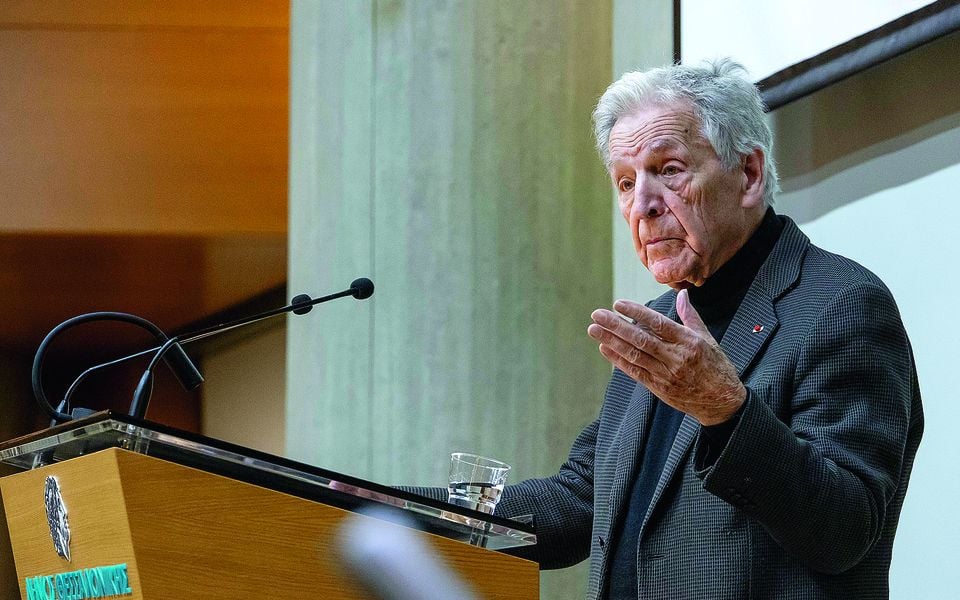
Renowned Greek-French filmmaker Costa-Gavras marked his 93rd birthday in Thessaloniki, Greece, where the city paid tribute to the legendary director at a historic location tied to one of his most celebrated works. The commemoration took place at the site where politician Grigoris Lambrakis was assassinated in 1963, an event that served as the inspiration for Costa-Gavras’ iconic political thriller “Z,” which brought international attention to political oppression in Greece.
During the celebration, the acclaimed director reflected on his remarkable career and the personal influences that shaped his artistic vision. According to reports from the event, Costa-Gavras credited both his illiterate mother and his wife Michelle as pivotal figures in his success as a filmmaker.
Costa-Gavras Reflects on Political Cinema Legacy
The director characterized his groundbreaking film “Z” as a “scream of protest,” drawing a powerful comparison to the simple yet defiant act of writing “Down with dictatorship” on a wall. This description underscores the film’s enduring impact as a work of political cinema that transcended entertainment to become a statement against authoritarian rule. Released in 1969, “Z” won the Academy Award for Best Foreign Language Film and remains a touchstone for politically engaged filmmaking.
The Thessaloniki tribute highlighted the connection between art and historical memory, with the location itself serving as a poignant reminder of the real events that inspired Costa-Gavras’ work. The assassination of Lambrakis became a symbol of resistance against the political turbulence that eventually led to Greece’s military dictatorship.
Director Warns of Rising Political Extremism
However, the birthday celebration also provided a platform for Costa-Gavras to express grave concerns about contemporary global politics. The filmmaker warned about the far right’s rise in France, his adopted homeland, signaling what he described as troubling political shifts across Europe.
Additionally, Costa-Gavras painted a sobering picture of the current global landscape, stating that humanity has entered “a very difficult era.” According to the director, multiple crises are converging to create an unsettling new reality for the world.
The veteran filmmaker specifically cited the ongoing conflict in Ukraine, the volatile situation in Israel, and former President Trump’s return to political prominence as factors shaping this challenging period. These references reflect his continued engagement with international affairs and his willingness to speak out on political matters, consistent with the activist spirit that has characterized much of his filmmaking career.
A Career Spanning Decades of Political Commentary
Meanwhile, Costa-Gavras’ concerns about democratic backsliding and authoritarianism echo themes that have pervaded his work throughout his career. Beyond “Z,” the director has created numerous films examining political corruption, human rights abuses, and state violence, including “Missing” and “State of Siege.”
In contrast to filmmakers who shy away from controversial subjects, Costa-Gavras has consistently used cinema as a tool for political commentary and social critique. His work has influenced generations of filmmakers who seek to blend artistic expression with political engagement.
The recognition in Thessaloniki represents continued appreciation for Costa-Gavras’ contributions to both Greek and international cinema. His ability to transform historical events into compelling narratives has earned him a unique place in film history, bridging European art cinema with accessible political thrillers.
As Costa-Gavras enters his tenth decade, his warnings about the current political climate carry the weight of someone who has witnessed and documented historical cycles of oppression and resistance. Whether his concerns will resonate with contemporary audiences and policymakers remains to be seen, though his legacy as a filmmaker committed to political truth-telling appears secure.

Follow Live Media News on Google News
Get Live Media News headlines in your feed — and add Live Media News as a preferred source in Google Search.
Stay updated
Follow Live Media News in Google News for faster access to breaking coverage, reporting, and analysis.
- Search any trending topic on Google (for example: Greece news).
- On the results page, find the Top stories section.
- Tap Preferred sources and select Live Media News.