


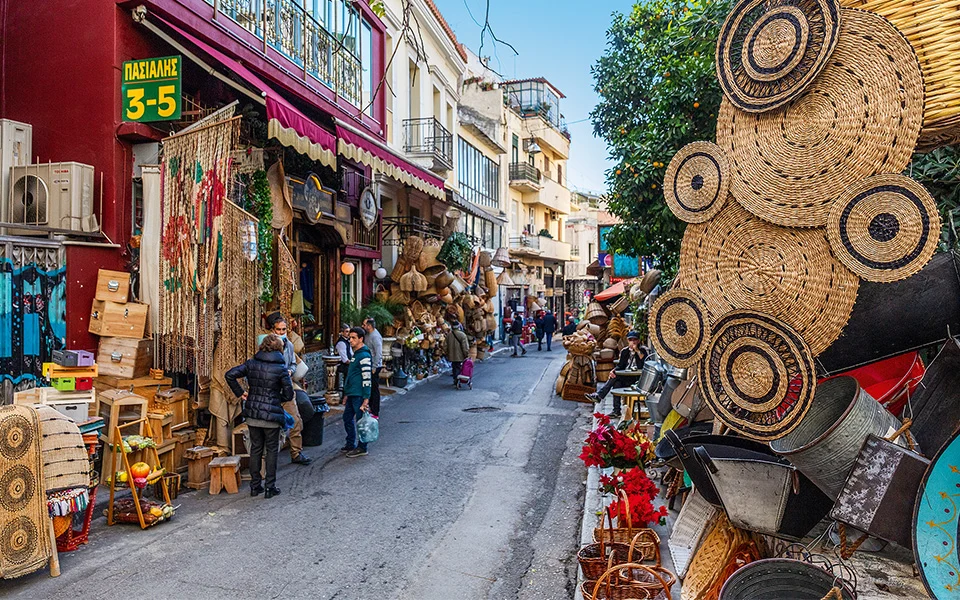
Walking through Athens offers a unique perspective on the Greek capital that cannot be replicated by any other mode of transport, according to architect and urban planner Alexandros Papageorgiou-Venetas. His recently published book “Vimatismoi: Walks in the City” celebrates more than eight decades of exploring Athens on foot, presenting the practice of urban walking as both a physical activity and a contemplative dialogue with the cityscape.
The book, published in Greek by Agra, combines personal recollections with passages from Greek and international literature. Papageorgiou-Venetas draws on writers including Walter Benjamin, Goethe, Edgar Allan Poe, and Andreas Embirikos to create what he describes as a polyphonic narrative of the pedestrian experience in Athens.
Athens Walking Routes Through the Decades
Papageorgiou-Venetas began his walking explorations around 1940, following his father to the then-undeveloped area of Pangrati. According to the author, the entire district consisted of little more than fields and perhaps ten houses at the time. The Church of Profitis Ilias, where he flew kites as a child, was still under construction.
However, the urban planner acknowledges that Athens has become increasingly challenging for pedestrians over the decades. The city is now most tolerable when empty, he notes, though this contradicts the fundamental purpose of urban spaces designed for human activity.
Best Neighborhoods for Urban Exploration
Despite these challenges, Papageorgiou-Venetas identifies several Athens neighborhoods that reward pedestrian exploration. Plaka, the most historic urban core in Greece, was significantly improved through restoration efforts led by Professor Dionysis Zivas approximately 20 to 30 years ago, according to the author. The work was completed under the supervision of then-minister Stefanos Manos.
Additionally, Petralona emerges as the author’s most compelling recommendation for walking in Athens. The neighborhood has maintained low-rise buildings to protect views of the Acropolis and surrounding archaeological sites. Even with newer construction, Petralona retains its pleasant residential character on the slopes below Filopappou Hill.
Meanwhile, Psyrri preserves its human scale despite risks of over-commercialization, the author observes. The historic craftsmen’s district turned bohemian enclave still rewards exploration through its narrow lanes. In contrast, Kypseli offers vibrant multicultural atmosphere while retaining interwar architectural elements, its squares, market, and the Fokionos Negri pedestrian street.
The Pedestrian Experience in Modern Athens
Papageorgiou-Venetas insists that authentic urban discovery requires walking rather than driving. From a vehicle, the cityscape appears different—perhaps interesting or even spectacular—but walking allows deeper appreciation of architecture and connection with place, he explains. The pedestrian pace provides time for reflection and noticing details that would otherwise disappear.
Nevertheless, recent improvements offer grounds for optimism about Athens walking conditions. The ratio of greenery has increased in recent years as understanding of its importance has grown, according to the author. Plants emerge from the smallest cracks, sustained by Attica’s high water table even without regular watering.
Future Prospects for Athens Pedestrians
The capital’s polycentric structure creates rich diversity across 55 municipalities with well-developed infrastructure, Papageorgiou-Venetas notes. Each district offers distinct character, from Psyrri to Halandri, where older cores persist amid ongoing change. This variety lends particular charm to the metropolis.
Furthermore, the author expresses optimism about younger generations who care deeply about their urban environment. These “internal tourists” educate themselves about their city and explore it thoughtfully, he observes. The Greek spirit maintains a unique connection with place that produces revitalizing movements each decade.
The author concludes by citing architect Dimitris Pikionis, who said true wanderers must approach walking with a sense of pilgrimage—meaning awareness of a place’s character and history. This philosophy continues to guide those discovering Athens on foot, though the city’s evolution as a pedestrian-friendly environment remains an ongoing process with uncertain outcomes.

Follow Live Media News on Google News
Get Live Media News headlines in your feed — and add Live Media News as a preferred source in Google Search.
Stay updated
Follow Live Media News in Google News for faster access to breaking coverage, reporting, and analysis.
- Search any trending topic on Google (for example: Greece news).
- On the results page, find the Top stories section.
- Tap Preferred sources and select Live Media News.