


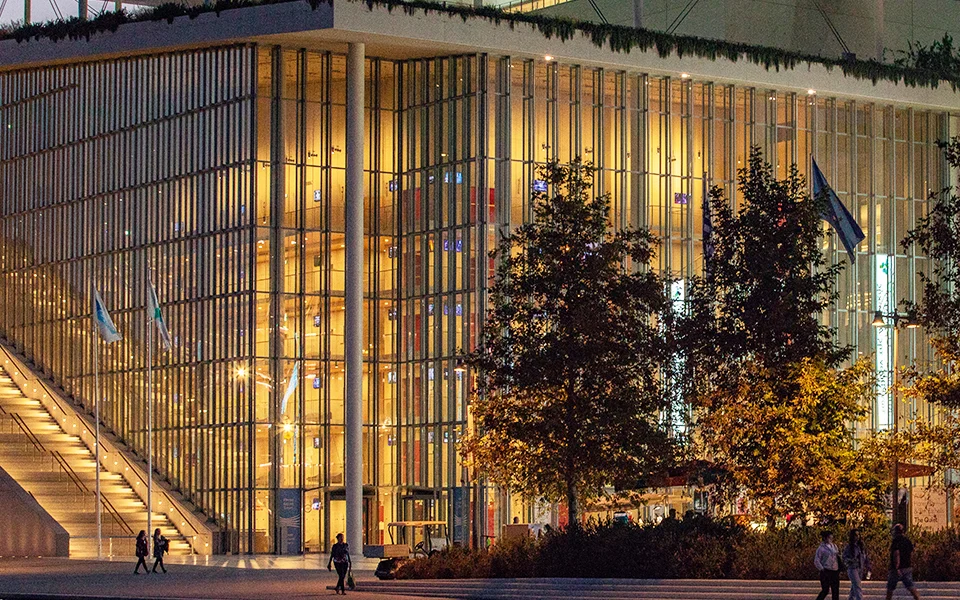
The Greek National Opera has experienced a dramatic transformation since relocating to the Stavros Niarchos Foundation Cultural Center in 2017, evolving from a traditional institution into one of Europe’s most dynamic opera houses. Sold-out performances have become standard, international visitors are flocking to Athens specifically for productions, and high-profile collaborations with artists like filmmaker Yorgos Lanthimos and performance artist Marina Abramović have elevated the company’s global profile.
In November, the company marked another milestone by hosting the International Opera Awards for the first time in Greece, with the Lifetime Achievement Award presented to acclaimed Greek mezzo-soprano Agnes Baltsa. This recognition underscores the opera house’s rise to international prominence in less than a decade.
How the Greek National Opera Transformed Its Audience
According to artistic director Giorgos Koumendakis, a composer who has led the company since 2017, the transformation stems from a deliberate strategy to take creative risks and abandon conservative programming. The move to the Stavros Niarchos Foundation Cultural Center provided the physical infrastructure necessary for ambitious productions, but the real change came from building an Alternative Stage that gave younger artists freedom to develop contemporary works.
Koumendakis explains that the goal was to demonstrate that opera is a living art form relevant to contemporary audiences. The company maintained respect for traditional music and librettos while embracing freedom in scenic and dramaturgical interpretation, creating productions that appeal to diverse audiences across generations and backgrounds.
International Recognition and Growing Tourism
International partnerships have significantly boosted the company’s visibility, according to Koumendakis. Co-productions with major opera houses, tours of the repertoire abroad, and hosting large-scale events have generated hundreds of international media articles placing the Greek National Opera firmly among Europe’s leading houses.
The artistic director notes that securing collaborations was initially challenging, but the company now regularly receives interesting proposals from around the world. This shift reflects the organization’s evolution into a destination for opera lovers globally.
Soprano Vassiliki Karagianni, who has performed at La Scala in Milan and London’s Covent Garden, confirms that foreign artists now view the company as a major opera house for potential ongoing collaborations. Ticketing data reveals that international visitors account for up to 30 percent of the audience for certain productions, a substantial proportion comparable to other major European opera cities.
Expanding Demographics and Box Office Success
Vasilis Louras, Head of the Promotion Department, reports that attendance at the Main Stage and summer productions consistently exceeds 90 percent. Between 2019 and 2023, audiences aged 25 to 34 increased by seven percent, representing a significant demographic shift for an art form once considered inaccessible to younger generations.
The demand can be extraordinary: twelve January 2026 performances of “Requiem for the End of Love,” composed by Koumendakis and choreographed by Dimitris Papaioannou, sold out in just 2 hours and 50 minutes. However, Koumendakis emphasizes that sold-out performances, while financially welcome, are not the guiding compass; the company prioritizes the lasting impact on spectators and society.
Additionally, the company’s marketing strategy extends beyond traditional campaigns to include hosting foreign journalists, collaborating with major international broadcasters like French network Mezzo, and cultivating a strong social media presence that connects with younger audiences. Past productions led by renowned figures such as Bob Wilson, Marina Abramović, and Fanny Ardant have demonstrated that star power from beyond the opera world can broaden audiences and guarantee commercial success.
Building From the Ground Up
Baritone Dionysis Sourbis, who received the Laurence Olivier Award in 2016, has been part of the company’s history for nearly twenty-five years. He attributes the audience evolution to the organization’s outward-looking approach, which began even before the move to the cultural center with initiatives like the Suitcase Opera, bringing performances to unexpected spaces as early as 2011.
Stage manager Katerina Petsatodi, who has worked with the organization for nearly fifteen years, reports that foreign creative teams who collaborated with the company during its Olympia Theatre days now acknowledge the completely different level at which it operates. Meanwhile, public relations officer Evangelia Kourti consistently hears from leading figures in the opera world that the scale and quality of productions are now comparable to those of major international houses.
The company’s upcoming season includes several highly anticipated productions: “Anna Bolena” scheduled for March-April 2026, “Carmen” running from April through June 2026, and “Medea,” which will be presented on June 20 at the Ancient Theatre of Epidaurus. These productions will test whether the Greek National Opera can maintain its momentum and continue attracting both domestic and international audiences at current levels.

Follow Live Media News on Google News
Get Live Media News headlines in your feed — and add Live Media News as a preferred source in Google Search.
Stay updated
Follow Live Media News in Google News for faster access to breaking coverage, reporting, and analysis.
- Search any trending topic on Google (for example: Greece news).
- On the results page, find the Top stories section.
- Tap Preferred sources and select Live Media News.