


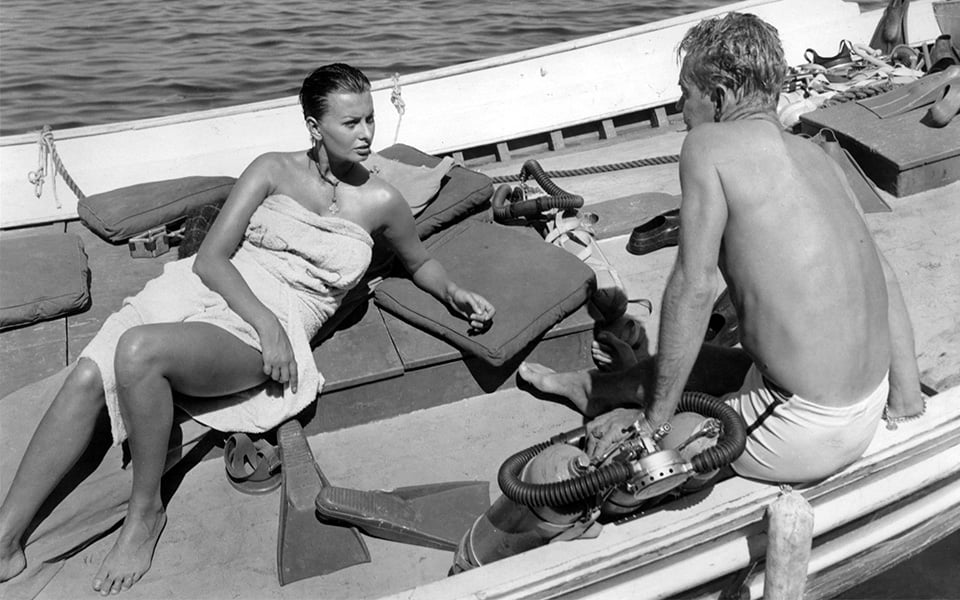
A new documentary explores how the filming of a 1956 Hollywood production transformed the Greek island of Hydra from an economically struggling community into an internationally recognized cultural destination. The film “Hydra & Sophia: Echoes of a Dolphin” chronicles the arrival of Sophia Loren and the crew of “Boy on a Dolphin,” capturing the memories of local residents who witnessed this pivotal moment in the island’s history.
In late September 1956, news spread through Hydra’s narrow streets that 20th Century Fox would be filming on the island. According to 87-year-old Giannis Gavalas, a lifelong resident, the announcement promised that “shops and tavernas will be packed” and that “Hydra will become known to the whole world.”
The documentary was conceived by Australian film producer Amanda Palmer, who has lived on Hydra since 2023 and created the ArtCinema cultural initiative. During a conversation with Gavalas in 2024, Palmer realized that while Loren had shared her impressions of Hydra internationally, local residents who experienced the filming firsthand had never recorded their memories.
Palmer quickly contacted director Antonis Sotiropoulos to propose the project. Developed by Sotiropoulos and Georgia Andreou, the documentary weaves together personal accounts from Hydriots, enhanced through selective use of artificial intelligence, with insights from historians and local experts.
Hollywood’s First Greek Location Shoot
“This was the first time Hollywood had ever chosen Greece as a filming location, and it also marked the English-language debut of the then 22-year-old Italian actress,” Palmer noted. The production’s arrival marked a significant turning point for an island struggling with limited employment opportunities and economic hardship in the postwar period.
Many Hydra residents had relocated to Piraeus for work, while others spent extended periods at sea in the demanding sponge-diving trade. Tourists were rare, making the island’s present-day cosmopolitan image difficult to imagine for those unfamiliar with its history.
Boy on a Dolphin was initially planned for Mykonos, which was already attracting international attention. However, the island’s strong meltemi winds proved too challenging for the production, according to the report. Cinematographer Vassilis Maros, who admired Hydra, proposed the Saronic island as an alternative filming location.
Sophia Loren’s Impact on Hydra’s Transformation
When Loren finally arrived by small boat, about a dozen local youths who had skipped school waited at the pier. “None of us had actually seen a photo of Loren before,” Gavalas recalled. “When we finally realized which one she was, we were disappointed. She looked exhausted from the trip and perhaps overwhelmed by the reception.”
Loren’s arrival in Athens had been equally dramatic, with crowds surging forward at the airport. Contemporary press reports described how police had to intervene to help the young star escape. Loren herself later admitted she had been terrified by the intense reaction from fans.
However, first impressions on Hydra soon gave way to fascination. As Loren moved through the island, walking narrow alleys and climbing toward windmills, she became a constant point of attention. “We were used to seeing women dressed modestly from head to toe, so Loren’s necklines and commanding presence quite literally stirred us up,” Gavalas recalled.
The actress grew more comfortable with locals over time, greeting them warmly and often posing for photographs in what Gavalas describes as an early version of the selfie. Near filming’s end, Gavalas asked for a picture, but his friend failed to capture the moment. “It’s a regret I still carry,” he said.
Economic Benefits and Cultural Exchange
The cast and crew stayed at the Hydrousa hotel and smaller guesthouses, eating daily at modest tavernas including the legendary Xeri Elia. Stefanos Douskos, now 88, remembers serving actor Alan Ladd regularly. “He would call me over to keep his glass full,” Douskos recalls.
Adults were hired as extras, laborers and boat captains, earning generous daily wages for the time. “It mattered to have money in your pocket every day back then,” Gavalas noted. “People were so happy that, when the filming ended, they treated everyone in the village.”
Additionally, the production marked many locals’ first real exposure to English at a time when French remained the primary foreign language taught in Greek schools. Children followed the crew around the island in exchange for candy, creating lasting memories of cultural exchange.
Behind the Glamour
Behind the scenes, the shoot proved demanding for the young star. “I’ve seen Loren cry,” Gavalas said. “The director kept asking her to repeat a scene. She wanted to give her best, but at one point she broke.”
Palmer highlights another revealing moment involving the song “Ti einai afto pou to lene agapi” (What Is This Thing They Call Love). After hearing it at a Piraeus taverna, Loren decided to learn and sing it in Greek rather than use dubbing. “Young girls in Hydra would sneak out after curfew just to sit outside the house where she was taking singing lessons,” Palmer said.
According to Palmer, that performance remains one of the film’s highlights. “Sophia Loren was ahead of her time. As an Italian, she wanted to truly honor the image of the Greek and Mediterranean woman.”
Lasting Legacy
The production team remained on Hydra through winter, departing in early 1957. As Boy on a Dolphin reached cinemas worldwide, Hydra began attracting film-inspired visitors. “By 1959 and 1960, foreign travelers were already asking us for rooms,” Gavalas recalled.
The documentary premiered on Hydra in October 2024 as part of the ArtCinema Hydra initiative. Palmer describes the project as an expression of gratitude to the actress for placing Hydra on the international map and helping shape its reputation as an artistic sanctuary.
Palmer plans to share the documentary with the family of the now 91-year-old Loren during an upcoming trip to Los Angeles. The film is expected to begin screening at international film festivals, though specific dates and venues have not been confirmed.

Follow Live Media News on Google News
Get Live Media News headlines in your feed — and add Live Media News as a preferred source in Google Search.
Stay updated
Follow Live Media News in Google News for faster access to breaking coverage, reporting, and analysis.
- Search any trending topic on Google (for example: Greece news).
- On the results page, find the Top stories section.
- Tap Preferred sources and select Live Media News.