


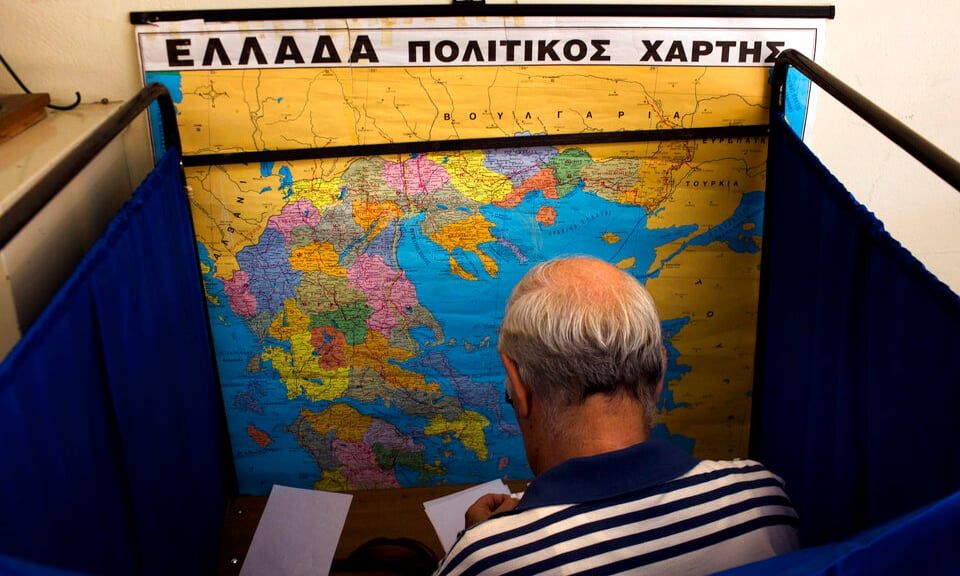
Greece’s Interior Ministry has introduced legislation to Parliament that would establish postal voting for Greeks abroad and create a dedicated overseas electoral district for national elections. The proposed reforms would fundamentally change how expatriate Greeks participate in elections by allowing them to vote by mail and select candidates from a specialized diaspora constituency rather than the current nationwide State List system.
According to the bill submitted for ratification, Greeks living abroad would cast ballots within their own dedicated constituency instead of voting exclusively for the Epikrateias list as they do now. The new system would enable diaspora voters to choose both their preferred political party and specific candidates from a slate representing Greeks across the global diaspora.
How the Overseas Electoral District Would Function
The proposed overseas constituency would allocate three parliamentary seats to diaspora voters. These seats would be distributed based on each party’s total nationwide vote share, including all ballots cast from abroad. The Interior Ministry indicated that the proportional system currently used for other three-seat constituencies in Greece would apply to these diaspora seats.
However, the allocation mechanism ensures that representation remains tied to overall party performance rather than creating an independent diaspora voting bloc. This approach integrates expatriate votes into the national electoral framework while providing Greeks abroad with direct candidate selection.
Constitutional Requirements for Implementation
The Greek Constitution mandates that electoral reforms of this nature secure a two-thirds supermajority in Parliament to take effect immediately. According to the bill, this means 200 votes would be required for the changes to apply to the upcoming 2027 national elections.
Additionally, if the legislation fails to achieve this threshold, both the new overseas electoral district and postal voting for national contests would be delayed until the following electoral cycle. Meanwhile, the current system requiring in-person voting at designated polling stations abroad would remain the standard for national elections until the supermajority is secured.
Context Behind the Electoral Reforms
The proposed changes address long-standing calls from diaspora communities for greater electoral participation. In contrast to the limited options currently available, postal voting would eliminate the need for expatriate Greeks to travel to physical polling locations, which can be sparse in countries with smaller Greek populations.
Furthermore, the dedicated constituency responds to concerns that the State List system provides insufficient representation for diaspora-specific interests and candidates. The ministry’s proposal attempts to balance increased diaspora engagement with maintaining proportional representation principles that govern Greece’s electoral system.
Political Implications and Challenges
Securing 200 parliamentary votes represents a significant hurdle for the proposed electoral reforms. The requirement reflects constitutional safeguards designed to ensure broad consensus on fundamental changes to Greece’s voting system.
Moreover, the establishment of postal voting for Greeks abroad introduces new administrative challenges regarding ballot security, verification procedures, and timeline management across multiple countries. Authorities have not confirmed specific details about how postal voting would be implemented logistically if the bill passes.
Parliamentary debate on the bill is expected to proceed in the coming weeks, with political parties likely to negotiate specific provisions before any vote. The timeline for reaching the necessary supermajority remains uncertain, and the outcome will determine whether these reforms shape the 2027 elections or are postponed to a later electoral cycle.

Follow Live Media News on Google News
Get Live Media News headlines in your feed — and add Live Media News as a preferred source in Google Search.
Stay updated
Follow Live Media News in Google News for faster access to breaking coverage, reporting, and analysis.
- Search any trending topic on Google (for example: Greece news).
- On the results page, find the Top stories section.
- Tap Preferred sources and select Live Media News.