


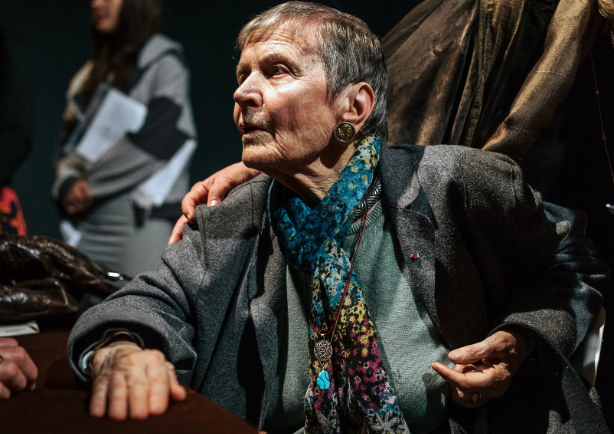
Greek historian Eleni Glykatzi-Ahrweiler, a pioneering Byzantine scholar who transformed European understanding of the medieval empire, has died at the age of 99. The renowned academic, who broke gender barriers at the Sorbonne and dedicated her career to illuminating Byzantium’s role in European civilization, leaves behind a profound scholarly legacy that reshaped historical studies.
Born in Athens in 1926 to parents from Asia Minor, Glykatzi-Ahrweiler pursued historical studies at the University of Athens before continuing her education in Paris. There she met Jacques Ahrweiler, a French Navy officer whom she married, and together they had one daughter, Marie-Helene.
Revolutionary Byzantine Studies Scholar
Throughout her distinguished career, Glykatzi-Ahrweiler approached Byzantium not simply as an academic subject but as a vital framework for understanding political thought, social organization, and cultural continuity. Her groundbreaking research fundamentally altered how historians and Europeans perceived the Byzantine Empire’s contribution to Western civilization. The Byzantine scholar’s work emphasized the empire’s critical position as a bridge between ancient and modern Europe.
In 1967, she achieved a significant milestone by becoming a professor at the prestigious Sorbonne. However, her most historic achievement came in 1976 when she became the first woman in seven centuries to hold the institution’s highest administrative positions, serving successively as department chair, university president, and rector.
Cultural Leadership Beyond Academia
Beyond her academic appointments, Glykatzi-Ahrweiler maintained an active presence in numerous international organizations and cultural institutions. Her involvement ranged from the Center Georges Pompidou to UNESCO and the European Cultural Center of Delphi, according to her published record. Through these roles, she successfully connected rigorous historical scholarship with contemporary cultural discussions affecting modern Europe.
Additionally, the Byzantine historian was known for her outspoken views on modern political issues affecting Greek heritage. In her book “From Me, These…” she examined memory, history, and contemporary affairs, criticizing what she described as Turkish President Recep Tayyip Erdogan’s “unhistorical absurdities,” according to published excerpts.
Advocacy for Greek Cultural Heritage
Glykatzi-Ahrweiler was particularly passionate about the Parthenon Marbles controversy, arguing that Lord Elgin “never received a firman” from Sultan Selim III for their removal. She characterized the nineteenth-century acquisition as “a swindle” and expressed hope that the marbles would return to Greece during her lifetime. Meanwhile, she reflected critically on Greek national character, stating that if she could remove one defect, “it would be the ‘ego,'” according to her published statements.
Her approach to Byzantine studies emphasized the empire’s relevance to understanding modern European identity and cultural development. Through decades of teaching, writing, and public engagement, she built bridges between ancient history and contemporary cultural debates. The historian’s influence extended far beyond academic circles, shaping public discourse about European cultural heritage.
Tributes Highlight Lasting Impact
Greek President Konstantinos Tasoulas paid tribute to the late scholar, stating that she “illuminated the timeless facet of Greekness through her work and, at the same time, stood out for her authentic Greek character.” He emphasized that she served as “a role model for women scientists, and for every young person dreaming of reaching the summit,” according to his official statement.
Funeral arrangements and memorial services have not yet been publicly announced. The academic community in Greece, France, and across Europe is expected to honor her contributions to Byzantine studies and her pioneering role as a woman in higher education leadership in the coming weeks.

Follow Live Media News on Google News
Get Live Media News headlines in your feed — and add Live Media News as a preferred source in Google Search.
Stay updated
Follow Live Media News in Google News for faster access to breaking coverage, reporting, and analysis.
- Search any trending topic on Google (for example: Greece news).
- On the results page, find the Top stories section.
- Tap Preferred sources and select Live Media News.