


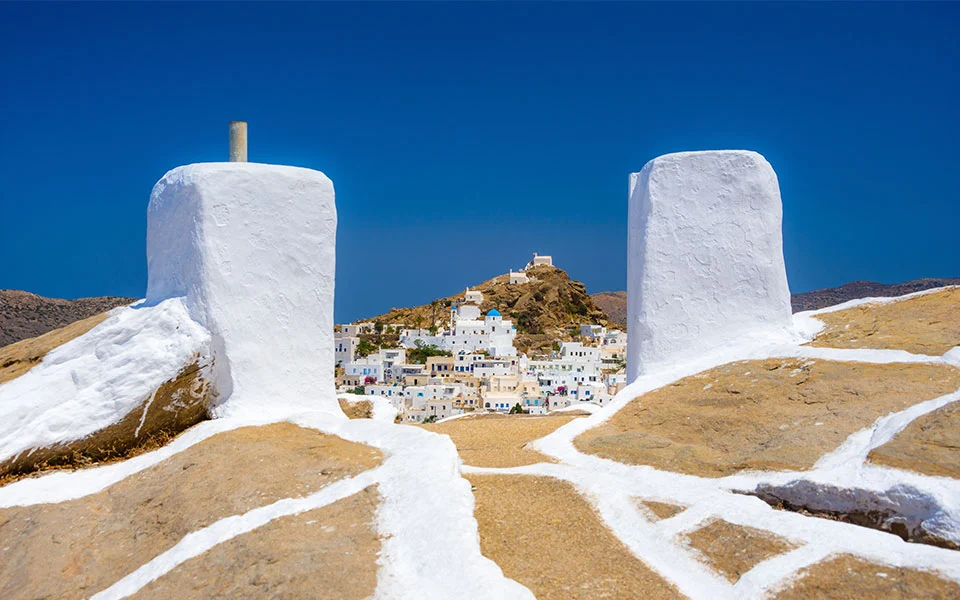
The Greek island of Ios is shedding its long-held reputation as simply a party destination and emerging as a multi-dimensional Cycladic retreat focused on sustainability and cultural heritage. According to recent reports from Euronews and international travel publications, Ios tourism is experiencing a transformation in 2026, with the island appearing on must-visit lists from The Times of London to French travel guide Petite Futé. This shift represents a conscious effort to balance tourism growth with quality of life for both visitors and permanent residents.
Mayor Gkikas Gkikas has emphasized that the island’s strategy now extends beyond enriching tourist experiences to creating a sustainable destination, according to Euronews. Restoration projects worth €100,000, combined with targeted infrastructure improvements and new community facilities, underpin this repositioning. Rather than chasing ever-growing visitor numbers like neighboring Santorini and Mykonos, Ios is carving out a narrative centered on authenticity and environmental stewardship.
Cultural Heritage Reshapes Ios Tourism Identity
The island’s capital, Hora, recently named by The Times among the 25 most beautiful villages in Greece, exemplifies this transformation. Stacked dramatically on a hillside above the port, the village delivers classic Cycladic aesthetics with whitewashed houses, narrow alleys, and blue shutters crowned by the silhouette of Panagia Gremiotissa church. Visitors now find boutique shops, artisan cafés, and quiet viewpoints offering sweeping Aegean panoramas, particularly magical at sunset.
Meanwhile, Ios boasts surprising archaeological richness for an island of its size. The prehistoric settlement of Skarkos, dating to the Early Bronze Age (3rd millennium BC), offers rare insight into ancient island life. Covering 1.1 hectares, it represents the largest and best-preserved settlement of the Keros-Syros culture, thought to have supported 200 to 300 people at its height.
Ancient Landmarks Draw New Attention
Perhaps the island’s most evocative cultural landmark is the Tomb of Homer, perched on a hill on Ios’ north coast overlooking the sea. According to the 2nd-century traveler Pausanias, the epic poet spent his final years on the island after consulting the Delphic oracle about his origins. The modest stone-and-marble structure bears an inscription reading: “Here the earth covers the sacred head of men and heroes, Homer the divine poet.”
Additionally, Palaiokastro adds another historical layer to sustainable tourism on Ios. The remains of a Byzantine-era fortress, rebuilt in 1397 by Francesco I Crispo atop earlier fortifications, crown a hill 275 meters above sea level. Though only sections of defensive walls survive, the views over the Aegean justify the climb, with the small church of Panagia Paleokastritsa still quietly watching over the sea.
Beaches and Gastronomy Support Diversified Tourism
Beyond cultural sites, Ios offers a varied coastline that suits different preferences. Mylopotas remains the island’s most famous beach, a broad sweep of golden sand with watersports facilities and beach bars popular among younger visitors. However, Koumpara offers calmer waters with views to neighboring Sikinos, while Aghia Theodoti rewards travelers with a largely unspoiled beach where crowds thin considerably.
In contrast to the party-focused past, Ios’ food culture is enjoying a quiet renaissance. Traditional family-run tavernas and contemporary kitchens serve dishes rooted in agricultural heritage, including mosenta (watermelon pie with thyme honey), skotyri (spicy herb-laced cheese), and gritsi (fresh cheese curd rarely found beyond the island). Local cheesemakers and traditional recipes are gaining recognition as part of the island’s authentic appeal.
Quality Over Quantity Defines New Direction
What distinguishes Ios tourism in 2026 is the deliberate focus on cultivating quality over quantity. Investments in resilience and public facilities, alongside conscious efforts to protect natural landscapes and local character, are beginning to yield results. This approach has caught the attention of travel editors across Europe, who recognize the island not as newly discovered but as newly considered.
The transformation allows Ios to offer an alternative to the overcrowded conditions plaguing some Greek islands, where mass tourism has strained infrastructure and eroded local character. By emphasizing sustainability, cultural preservation, and community well-being, the island presents a model for balanced tourism development in the Cyclades.
As 2026 progresses, observers will watch whether Ios can maintain this balance while managing increased international attention. The success of current initiatives may influence how other Greek islands approach tourism development, though authorities have not confirmed specific metrics or timelines for measuring the transformation’s long-term impact.

Follow Live Media News on Google News
Get Live Media News headlines in your feed — and add Live Media News as a preferred source in Google Search.
Stay updated
Follow Live Media News in Google News for faster access to breaking coverage, reporting, and analysis.
- Search any trending topic on Google (for example: Greece news).
- On the results page, find the Top stories section.
- Tap Preferred sources and select Live Media News.